Description
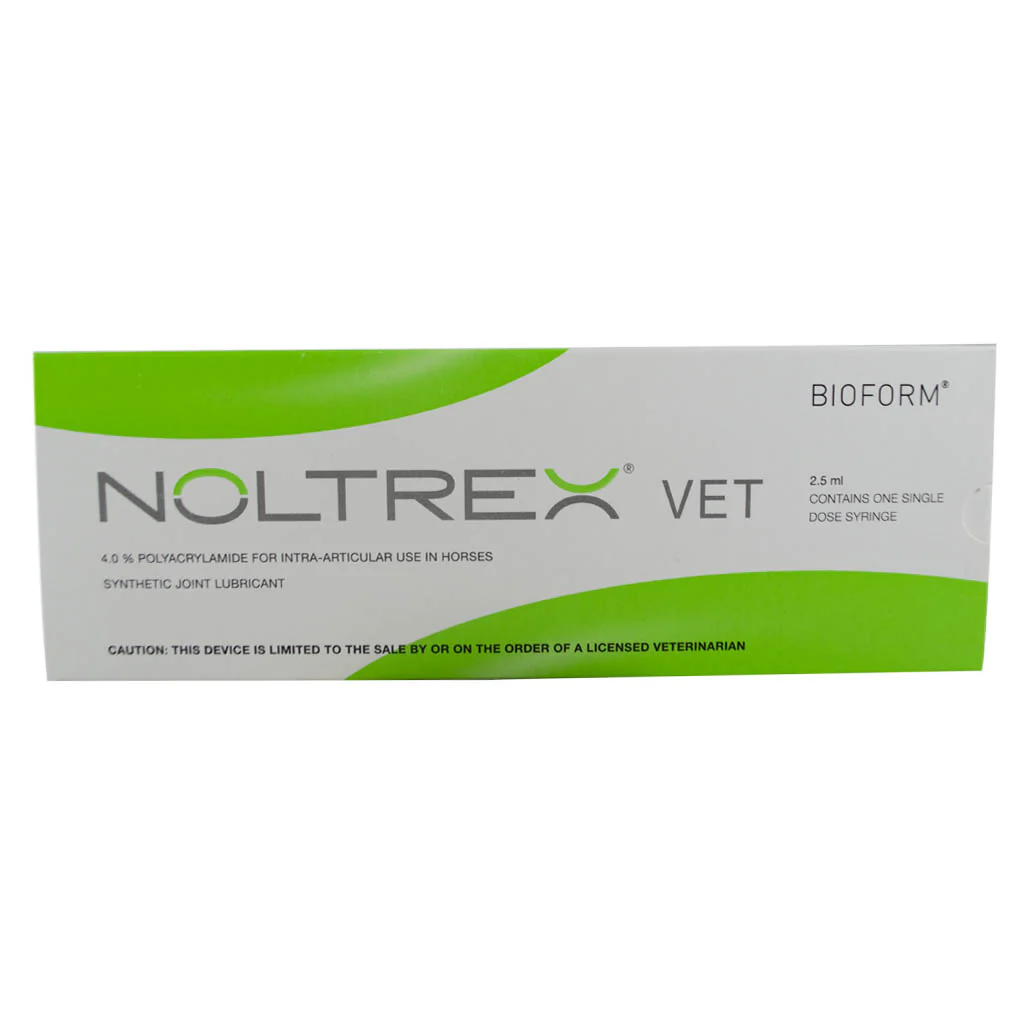
Noltrex for horses Vet Injection 2.5ml – Advanced Equine Joint Treatment
Noltrex for horses Vet Injection 2.5ml is an advanced intra-articular treatment designed to provide superior joint support for horses experiencing joint wear, stiffness, or reduced mobility. This pharmaceutical-grade solution contains 4% polyacrylamide hydrogel (PAAG), a synthetic viscosupplement that forms a protective, lubricating layer on cartilage surfaces to reduce friction and support long-term joint health.
Unlike conventional hyaluronic acid treatments that break down relatively quickly in the joint, Noltrex’s unique hydrogel formulation provides extended protection and lubrication. The synthetic polymer creates a durable cushioning effect that can last significantly longer than traditional viscosupplements, reducing the frequency of treatments needed and minimizing interruption to your horse’s routine.
Noltrex for horses particularly valuable for performance horses, aging equines, and animals in active training programs where joint health is critical to maintaining optimal function. The 2.5ml pre-filled syringe format provides precise dosing for targeted joint treatment, making it ideal for single-joint applications where accuracy and sterility are paramount.
This product requires a valid veterinary prescription and must be administered by a licensed veterinary professional through intra-articular injection. It is not suitable for home administration.
Understanding Equine Joint Health
Equine joint problems are among the most common causes of reduced performance and lameness in horses. As horses age or undergo intensive training, the cartilage within joints can deteriorate, leading to osteoarthritis and degenerative joint disease.
Common Joint Issues in Horses:
- Osteoarthritis and degenerative joint disease
- Cartilage wear from repetitive stress
- Reduced synovial fluid quality and quantity
- Joint inflammation and stiffness
- Decreased range of motion
- Pain during exercise or movement
Why Joint Lubrication Matters: Healthy joints rely on smooth cartilage surfaces and adequate synovial fluid to minimize friction during movement. When cartilage breaks down or synovial fluid quality decreases, bones can rub together causing pain, inflammation, and further deterioration. Viscosupplementation with products like Noltrex helps restore proper joint lubrication and protect remaining cartilage from additional damage.
How Noltrex Works – Polyacrylamide Hydrogel Technology
Noltrex for horses utilizes advanced polyacrylamide hydrogel (PAAG) technology to provide long-lasting joint protection through multiple mechanisms.
Mechanism of Action
Cartilage Protection: The 4% PAAG formulation creates a protective biofilm over existing cartilage surfaces. This hydrogel layer acts as a cushioning barrier that reduces direct contact between joint surfaces during movement, protecting cartilage from further wear and degradation.
Enhanced Lubrication: Noltrex integrates with the joint’s natural synovial fluid to improve overall lubrication properties. The hydrogel’s smooth, slippery surface reduces friction coefficient within the joint, allowing for smoother, more comfortable movement even in damaged or worn joints.
Long-Duration Effect: Unlike hyaluronic acid-based products that are gradually broken down and absorbed by the body within weeks, polyacrylamide hydrogel is more resistant to degradation. The synthetic polymer structure remains in the joint cavity for extended periods, providing sustained therapeutic benefits that can last months to years depending on the individual case.
Biocompatibility: PAAG is biocompatible and well-tolerated by equine joint tissues. Once injected, the hydrogel does not trigger significant inflammatory responses and integrates naturally with the joint environment without causing adverse tissue reactions in most cases.
Noltrex vs. Traditional Joint Treatments
Comparative Analysis
Noltrex vs. Hyaluronic Acid (HA) Injections:
Hyaluronic acid is the most commonly used viscosupplement for equine joints. While effective, HA has a relatively short duration of action, typically requiring repeated injections every few weeks to months. Noltrex’s polyacrylamide hydrogel provides significantly longer-lasting effects, potentially reducing treatment frequency to once every 6-24 months depending on the horse’s condition and activity level.
Noltrex vs. Corticosteroid Injections:
Corticosteroids provide powerful anti-inflammatory effects but do not address the underlying lubrication and cartilage protection needs. They can also have side effects with repeated use, including cartilage breakdown and increased infection risk. Noltrex offers mechanical joint support without the immunosuppressive or tissue-damaging effects associated with long-term corticosteroid use.
Noltrex vs. PRP (Platelet-Rich Plasma):
PRP therapy uses the horse’s own blood components to promote healing and reduce inflammation. While beneficial for certain conditions, PRP requires blood collection and processing, and effects are typically regenerative rather than mechanical. Noltrex provides immediate mechanical lubrication and protection, making it suitable for cases where structural joint support is the primary need.
When to Choose Noltrex:
- Horses requiring long-term joint lubrication with minimal repeat treatments
- Cases where traditional HA has provided insufficient duration of benefit
- Older horses with chronic joint wear needing sustained support
- Situations where reducing treatment frequency is important for training schedules
- Joints with moderate cartilage loss where mechanical protection is beneficial
Product Specifications
Product Name: Noltrex Vet Injection Volume: 2.5ml pre-filled sterile syringe Active Ingredient: 4% Polyacrylamide hydrogel (PAAG) Target Species: Equine (horses) Administration Route: Intra-articular injection only Formulation: Sterile, non-pyrogenic injectable gel Storage Temperature: 1°C to 30°C (34°F to 86°F) Shelf Life: As marked on packaging Prescription Status: Veterinary prescription required Administration: Licensed veterinarian only
Packaging: Single-use, pre-filled syringe maintains sterility and ensures accurate dosing. The ready-to-use format eliminates preparation time and reduces contamination risk.
Dosage & Administration Guidelines
Professional Administration Protocol
Important: Noltrex must only be administered by a licensed veterinarian with experience in intra-articular injections. This is not a product for home use or administration by horse owners.
Standard Dosing:
- Small joints (e.g., fetlock, pastern): 2.5ml (one syringe) per joint
- Medium joints (e.g., coffin joint, carpus): 2.5-5ml per joint
- Large joints (e.g., stifle, hock): May require multiple syringes as determined by veterinarian
Administration Procedure:
- Joint is prepared using strict aseptic technique
- Area is clipped and surgically scrubbed if necessary
- Local anesthesia may be used at veterinarian’s discretion
- Existing joint fluid may be aspirated before injection
- Noltrex is injected directly into the joint space
- Post-injection monitoring for immediate adverse reactions
Treatment Frequency: Unlike conventional viscosupplements requiring frequent repeat injections, Noltrex typically provides extended benefit. Repeat treatments may be administered every 6-24 months based on:
- Clinical response and symptom improvement
- Horse’s activity level and workload
- Degree of joint disease progression
- Veterinary assessment of joint condition
Post-Injection Care
Immediate Post-Treatment (24-48 hours):
- Rest or light turnout as directed by veterinarian
- Monitor injection site for swelling, heat, or pain
- Avoid strenuous exercise during initial integration period
Return to Activity: Your veterinarian will provide specific guidelines for resuming normal activity based on your horse’s individual condition and the joint(s) treated. Most horses can gradually return to regular exercise within days to weeks following injection.
Safety Information & Contraindications
When NOT to Use Noltrex
Contraindications:
- Active joint infection or septic arthritis
- Known hypersensitivity to polyacrylamide compounds
- Joints with severe structural damage requiring surgical intervention
- Acute traumatic joint injury until stabilized
Use With Caution:
- Horses with bleeding disorders or receiving anticoagulants
- Joints with active inflammation (may require pre-treatment)
- Animals with compromised immune systems
Potential Side Effects
Noltrex is generally well-tolerated when administered properly by veterinary professionals. Potential side effects may include:
Common (usually mild and transient):
- Temporary joint swelling or effusion
- Mild discomfort at injection site
- Brief period of increased sensitivity in treated joint
Rare:
- Allergic or hypersensitivity reactions
- Joint infection (risk with any intra-articular injection)
- Persistent inflammation requiring treatment
Important: Any signs of severe swelling, heat, persistent pain, or lameness worsening after injection should be reported to your veterinarian immediately, as these may indicate joint infection or adverse reaction requiring prompt treatment.
Drug Interactions
Inform your veterinarian of all medications and supplements your horse is currently receiving. While Noltrex does not typically interact with systemic medications, concurrent intra-articular treatments should be carefully timed and coordinated by your veterinary professional.
Frequently Asked Questions
What is Noltrex Vet and how does it work in horses?
Noltrex Vet is an advanced intra-articular injection containing 4% polyacrylamide hydrogel designed for equine joint treatment. It works by creating a protective, lubricating layer over cartilage surfaces within the joint. This biocompatible hydrogel reduces friction between joint surfaces, cushions remaining cartilage, and provides long-lasting mechanical support that can significantly outlast traditional hyaluronic acid treatments.
Which horses are good candidates for Noltrex treatment?
Noltrex is suitable for horses experiencing joint-related issues including osteoarthritis, degenerative joint disease, reduced mobility, or chronic joint stiffness. It’s particularly beneficial for performance horses in active training, aging horses with chronic joint wear, and animals who have shown limited duration of response to traditional viscosupplements. Your veterinarian will assess your horse’s specific condition to determine if Noltrex is an appropriate treatment option.
How long does Noltrex last compared to hyaluronic acid injections?
One of Noltrex’s primary advantages is its extended duration of action. While traditional hyaluronic acid injections typically provide benefit for weeks to a few months, Noltrex’s polyacrylamide hydrogel can remain effective significantly longer often 6 months to 2 years depending on the individual horse, severity of joint disease, and activity level. This extended duration means fewer treatments, less interruption to training, and potentially lower long-term treatment costs.
Is Noltrex safe for my horse?
When administered by a qualified veterinarian using proper sterile technique, Noltrex has demonstrated a good safety profile in equine patients. The polyacrylamide hydrogel is biocompatible and generally well-tolerated. As with any intra-articular injection, there are inherent risks including joint infection, inflammation, or allergic reaction, but these are rare when proper protocols are followed. Your veterinarian will discuss potential risks and benefits specific to your horse’s situation.
Can my regular veterinarian administer Noltrex?
Yes, Noltrex can be administered by any licensed veterinarian experienced in performing intra-articular injections. The product comes in a sterile, pre-filled syringe ready for use, making administration straightforward for veterinary professionals familiar with joint injection techniques. Your veterinarian will need to write a prescription, and you can order Noltrex through our licensed veterinary pharmacy for delivery to your vet clinic.
How many treatments will my horse need?
The number of treatments varies based on individual response and the severity of joint disease. Many horses experience significant improvement from a single treatment that lasts 6-24 months. Some horses with advanced joint disease may benefit from repeat treatments at regular intervals determined by clinical response. Your veterinarian will monitor your horse’s progress and recommend a treatment schedule tailored to your animal’s specific needs.
What is the difference between the 2.5ml size and larger volumes?
The 2.5ml Noltrex Vet syringe is designed for single small-to-medium joint applications. For smaller joints like the fetlock or pastern, one 2.5ml syringe typically provides adequate volume. For larger joints such as the stifle or larger hocks, your veterinarian may use multiple syringes (up to 5ml total) to achieve optimal joint filling and therapeutic effect. The appropriate volume depends on joint size and your veterinarian’s clinical judgment.
How do I order Noltrex for my horse?
To order Noltrex Vet, you’ll need a valid prescription from your veterinarian who has examined your horse and determined this treatment is appropriate. You can submit your prescription to our licensed veterinary pharmacy by upload, fax, or by authorizing us to contact your veterinarian directly. Once verified, we’ll ship Noltrex in temperature-controlled packaging to your veterinarian’s clinic where it will be administered. We cannot ship prescription veterinary medications directly to horse owners for home use.
Does Noltrex require special storage or handling?
Noltrex for horses should be stored at temperatures between 1°C to 30°C (34°F to 86°F) and protected from freezing and extreme heat. The pre-filled syringes maintain sterility until use. Your veterinarian will store the product appropriately at their clinic and ensure proper handling during administration. Once you order from our pharmacy, we ship with appropriate packaging to maintain product integrity during transit.
Ordering Noltrex from Our Licensed Veterinary Pharmacy
Prescription Submission Process
Step 1: Veterinary Examination Your horse must be examined by a licensed veterinarian who will determine if Noltrex is an appropriate treatment. Your vet will write a prescription specifying the product, volume, and number of syringes needed.
Step 2: Submit Your Prescription You can submit your veterinary prescription through:
- Digital upload during checkout
- Fax directly from your veterinarian to our pharmacy
- Mail original prescription to our facility
- Authorization for us to contact your veterinarian for verification
Step 3: Prescription Verification Our licensed veterinary pharmacists will verify the prescription with your veterinarian before dispensing. This typically takes 1-2 business days.
Step 4: Secure Delivery We ship Noltrex in appropriate packaging with temperature monitoring to ensure product integrity. Medication is delivered to your veterinarian’s clinic address for proper storage and administration.
Why Choose Our Pharmacy
✓ Fully Licensed & Accredited: Operating under veterinary pharmacy regulations with licensed pharmacists on staff
✓ Authentic Products: We source Noltrex directly from authorized distributors, ensuring product authenticity and proper storage throughout the supply chain
✓ Temperature-Controlled Shipping: All shipments include appropriate packaging to maintain required storage conditions during transit
✓ International Service: We ship to multiple countries where legally permitted, adhering to all international pharmaceutical shipping regulations
✓ Professional Support: Our veterinary pharmacy team is available to answer questions about ordering, shipping, and prescription requirements
✓ Secure & Confidential: All transactions and medical information are handled with strict confidentiality and security protocols